What does it take to lead a design business in a rapidly changing world? How do you build a practice that can move fluidly between cultural heritage and cutting-edge technology, between intimate homes and global brands, between personal expression and serious business value?
The 2025 General Session in Madrid brought together some of the most influential architects, designers, thinkers, and cultural leaders working today to explore those questions from every angle. From Santiago Calatrava’s bold architectural vision to Casa Josephine’s cinematic interiors, from the geoarchaeology of Charlotte Skene Catling to the exuberant universe of Agatha Ruiz de la Prada, these conversations form a living syllabus for design leadership right now—and they are all available in the Resource Library of the new DLN website.
Each General Session is paired with a downloadable white paper—available exclusively to DLN members and partners—that distills key ideas into concrete frameworks, questions, and action steps you can bring back to your team and your business.
Below, explore the full lineup and start building your own path through the program.
SESSION 1: Calatrava: A Career of Bold Architectural Vision
Santiago Calatrava in conversation with Paul Goldberger
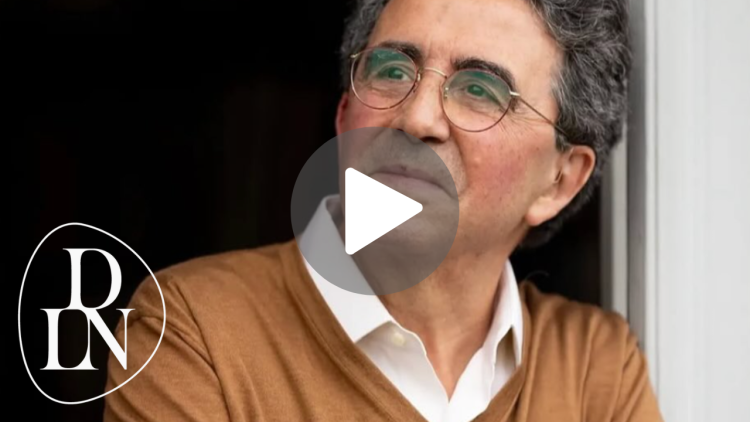
Known for his bold fusion of art, architecture, and engineering, Santiago Calatrava transforms skylines around the globe with works such as the World Trade Center Transportation Hub in New York, the City of Arts and Sciences in Valencia, and bridges that have become modern icons from Dallas to Jerusalem. At the Summit, he takes the stage with Pulitzer Prize–winning critic Paul Goldberger to reflect on a career that redefines the language of architecture.
Key Takeaways:
- Design from the human outward, at every scale
- Treat infrastructure as civic culture, not neutral utility
- Sustain wonder and conviction across long horizons
SESSION 2: Gesamtkunstwerk and the Power of Narrative Design
With Pablo López Navarro
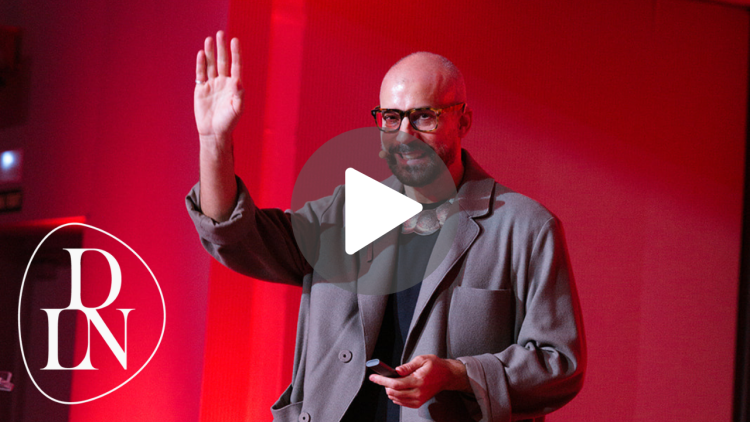
For Madrid-based Casa Josephine, founded by Iñigo Aragón and Pablo López Navarro, a design project is a holistic, narrative, and deeply thoughtful affair. The duo approaches each interior as a work of film or theater, writing a script for characters real or imagined and unfolding its plot long before embarking on furniture or materials selection. Then, deploying myriad collaborators in craft, they build a complete scenography, leaving no square inch of a space unaffected by their unique vision. In this session, Navarro pulls back the curtain on Casa Josephine’s process, reflecting on the power of storytelling to create spaces that excite, envelop, and enrich their clients.
Key Takeaways:
- Start with a story, not style
- Treat the project as a Gesamtkunstwerk—a total, integrated work
- Use narrative to align teams, collaborators, and craft
SESSION 3: Sharing Knowledge: Fusing the Physical and Digital Around Articulate Objects
With Adam Lowe, OBE
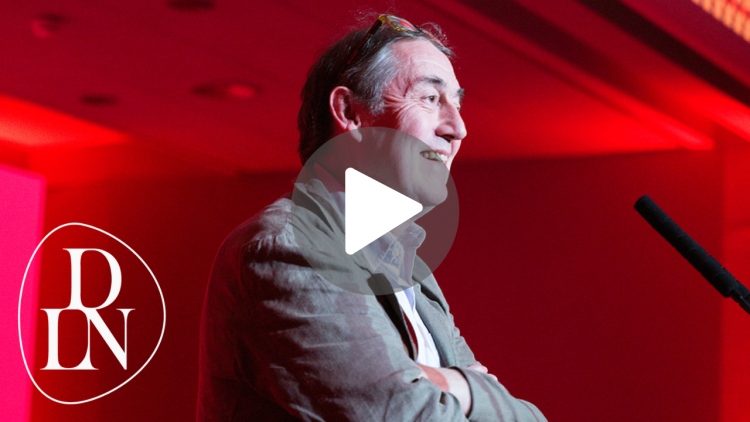
There are few places where you encounter a cutting-edge digital art installation, a full-scale replica of King Tut’s tomb, and a sculpture by Maya Lin—Factum Arte is one of them. Established in 2001, Factum Arte operates at the intersection of design, technology, and cultural heritage, fabricating new works for leading artists and collaborating with institutions on sophisticated reconstructions. Its 800-square-meter Madrid campus is a playground of makers whose diverse skills bridge traditional craftsmanship and emerging technology. In this session, founder Adam Lowe OBE elaborates on Factum Arte’s unique position at the intersection of art and technology and the physical and digital world, exploring the process that enables collaborations with the likes of Marina Abramović, Maya Lin, Shezad Dawood, Julian Schnabel, Sarah Sze, Ahmed Angawi, Anish Kapoor, and more.
Key Takeaways:
- Treat objects as living systems, not finished things
- Build studios as polytechnic ecosystems
- Redefine value and luxury through depth, not display
SESSION 4: Geoarchaeology and Immersive Narratives: An Architectural Seduction
With Charlotte Skene Catling
London- and Madrid-based architect Charlotte Skene Catling defines her practice through a conceptual approach known as geoarcheology, which excavates meaning through layers of cultural and geological context to shape architecture with deep narrative resonance. In this talk, she explores her work on three projects that exemplify her unique approach: Flint House at Waddesdon Estate in Aylesbury, a building designed for Jacob Rothschild as a “geological extrusion” of the surrounding Buckinghamshire landscape; the Dairy House, part of Somerset’s Newt Hotel, based on the 18th-century architectural treatise La Petite Maison—An Architectural Seduction; and the Grade I–listed St. Pancras Hotel in London, where she endeavors to redefine “luxury” through immersive narrative.
Key Takeaways:
- Begin with excavation, not aesthetics
- Design spaces as narratives that unfold in time
- Redefine luxury as knowledge made sensorial
SESSION 5: Evolution Through Self Expression with Fashion Designer Agatha Ruiz de la Prada
Agatha Ruiz de la Prada with Tristán Ramírez
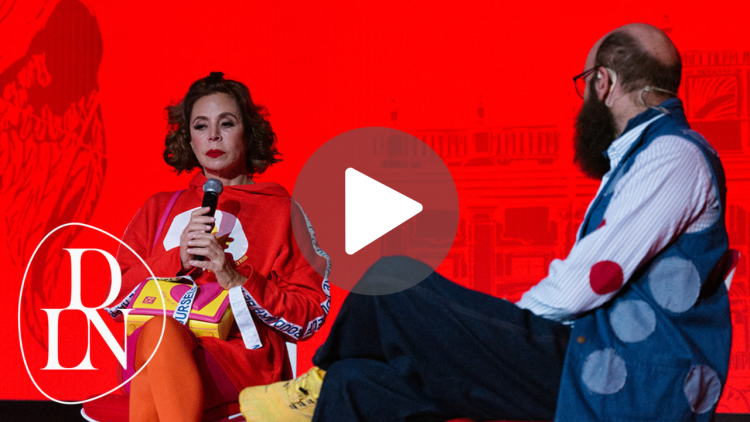
Over the course of her storied career, Madrid-born fashion designer Agatha Ruiz de la Prada maintains a clear creative vision and unmistakable exuberant style—all while constantly reinventing her practice and process for an ever-changing market. Her openness to varied product and licensing types, while maintaining clear self-expression, makes her one of Spain and Latin America’s most recognizable designers. With her son, Tristán Ramírez, at the helm of her company as CEO, her brand continues to expand. In this candid conversation, the mother-and-son collaborators discuss their process, vision, and the power of curiosity, self-expression, and ceaseless evolution.
Key Takeaways:
- Anchor everything in an unmistakable identity
- Balance creation, communication, and commerce as equals
- Evolve by expanding tools, not abandoning self-expression
SESSION 6: An American in Spain: Diplomacy and Design in Madrid
Michael S. Smith in conversation with Andrew Ferran
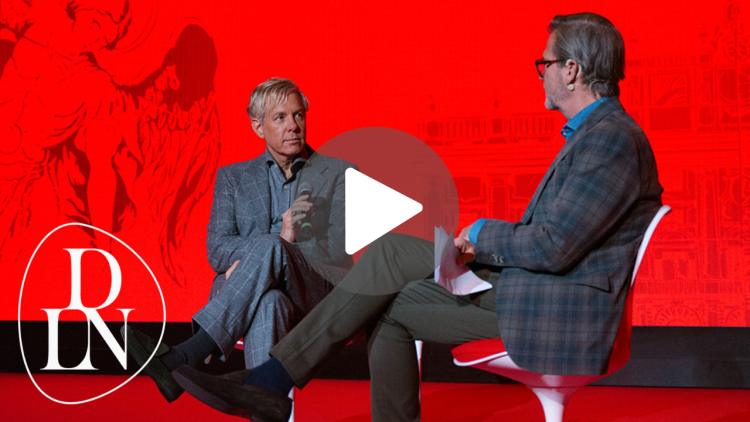
After completing a much-lauded overhaul of the private quarters of the White House for President Barack Obama and First Lady Michelle Obama in 2013, Michael S. Smith leaves the U.S. for Madrid when his partner, James Costos, is appointed ambassador to Spain and Andorra. There, the celebrated American designer immerses himself fully in Spain’s design tradition and architectural heritage, deeply intrigued by the layers and patina of its history. In the decade since, he continues to call Madrid his part-time home, splitting time between California and a 6,500-square-foot apartment in the Almagro neighborhood, where he and Costos entertain Spanish and American friends alike. Here, in conversation with Andrew Ferran—author of his most recent book—Michael reflects on his life in design and diplomacy as an American creative in the Spanish capital.
Key Takeaways:
- Treat space as an instrument of influence, not a backdrop
- Practice radical intentionality: nothing is neutral
- Use personal spaces as serious laboratories for ideas and values
SESSION 7: The Economics of Desire: Turning Human Aspiration into Business Value Through Design
With Francisco Javier López Navarrete
How does a creative leader bring value to their business? This is a fundamental topic of discussion within the DLN and one that Madrid-based thinker Francisco Javier López Navarrete explores through business programs specifically targeted to the design industry. In this session, he explains how, with a keen understanding of changing cultural context and deft communication skills, leaders can better understand their clients in order to deliver stronger results and secure their value in the marketplace. Over the course of a 20-minute lecture, attendees come away with a clear model for positioning their businesses in an evolving market.
Key Takeaways:
- Start with desire, not deliverables
- Design value as a full economic loop
- Win through continuous innovation grounded in context
SESSION 8: The Art of Interiors, The Art of Living
Mafalda Muñoz and Gonzalo Machado in conversation with Elsa Fernández-Santos
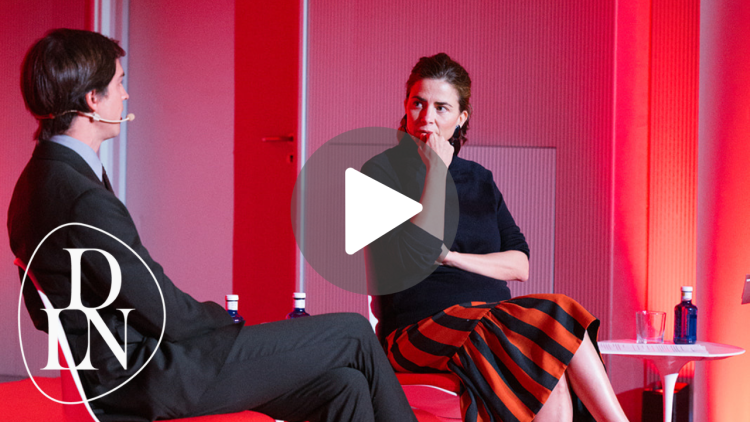
Casa Muñoz was born from a shared passion for the human side of architecture—the way interiors reflect lives, traditions, and aspirations. The husband-and-wife duo behind the firm run a practice grounded in proportion, scale, and harmony, blending respect for the past with a pursuit of fresh, enduring ideas. Operating under the axiom that they “design not just spaces, but the settings for life itself,” Muñoz and Machado reject staid notions of how a home should look, reimagining each project specifically for its client and their lifestyle. In this fireside-style chat, they reflect on how their unique approach produces work that constantly redefines the context of home and the standards of design within it.
Key Takeaways:
- Design for ritual, not representation
- Use objects as biography and tension
- Redefine luxury as everyday care
SESSION 9: Beyond Boundaries: Rethinking the Dialogue Between Design and Contemporary Craft
Anatxu Zabalbeascoa in conversation with Spanish creatives, organized by the Loewe Foundation
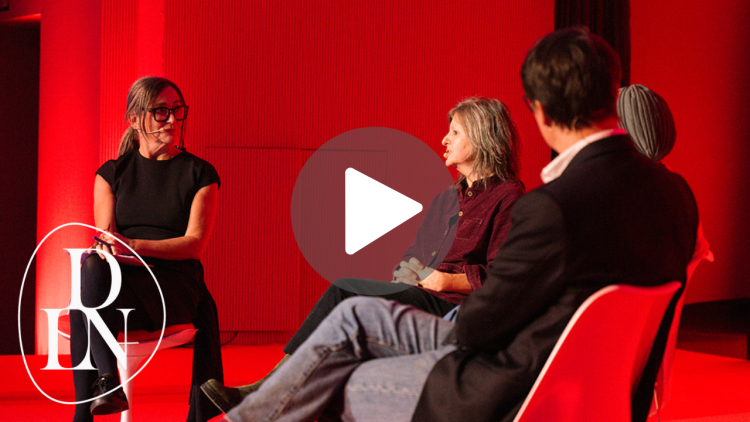
As the design industry ushers in a new craft renaissance, with burgeoning movements from Spain to Mexico to Scotland, the lines between handcraft and collectible design continue to blur in intriguing, thought-provoking ways. In this panel discussion comprised of Spanish creatives convened by the Loewe Foundation and moderated by celebrated design writer Anatxu Zabalbeascoa, participants will offer fresh takes on the age-old “art versus craft” question, positioning Spain’s current craft movement in the context of the luxury design market.
Key Takeaways:
- Treat craft as an ethic, not an aesthetic
- Design in the gradient between hand and machine
- Use making to restore connection and meaning
SESSION 10: Art, Design, Manufacturing, and a Singular Vision
Jaime Hayon in conversation with Emma Roig Askari
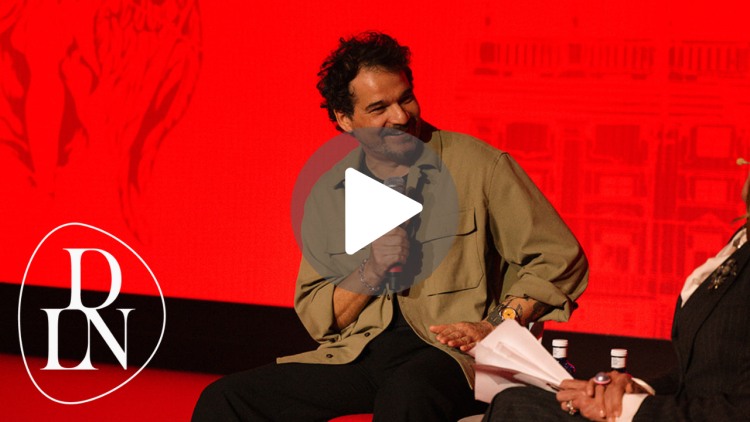
Multihyphenate creative Jaime Hayon considers himself a “modern archaeologist,” uncovering and reframing themes from nature, folklore, and ancient civilizations in a style that is simultaneously approachable, intriguing, and instantly identifiable. His trademark blend of playfulness, irony, and sophistication spans large-scale installations, restaurant interiors, and objets for the likes of Baccarat and Lalique. Spanish collector, author, and designer Emma Roig Askari dives into Hayon’s unique style and singular creative vision, exploring his myriad influences, connection to craft, and his position within contemporary Spain’s—and the global—design lexicon.
Key Takeaways:
- Start with story and emotion, then design
- Collaborate like a chameleon, protect the core
- Use joy, craft, and curiosity as serious tools
SESSION 11: Madrid to the World
Isabel López-Quesada in conversation with Maite Sebastiá
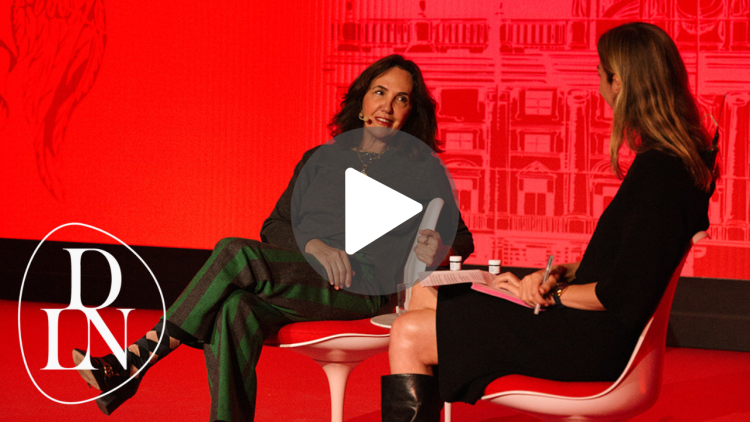
A native Madrileña, Isabel López-Quesada has operated her Madrid studio since she was just 20 years old; since then, she has become one of the world’s most celebrated designers, completing projects worldwide and earning recognition on the AD 100 and ELLE Decor A-List. Maite Sebastiá, meanwhile, built her journalism career interviewing the likes of Rem Koolhaas, Richard Rogers, Jonathan Anderson, Giorgio Armani, Paloma Picasso, Olafur Eliasson, and Stella McCartney before taking the helm at AD Spain in 2021. Onstage, the two discuss Madrid’s design sensibility within the larger context of creative conversations in Spain, Europe, and the world.
Key Takeaways:
- Design homes as living archives, not finished scenes
- Pursue beauty that endures and supports happiness
- Protect the irreplaceably human in a digital age