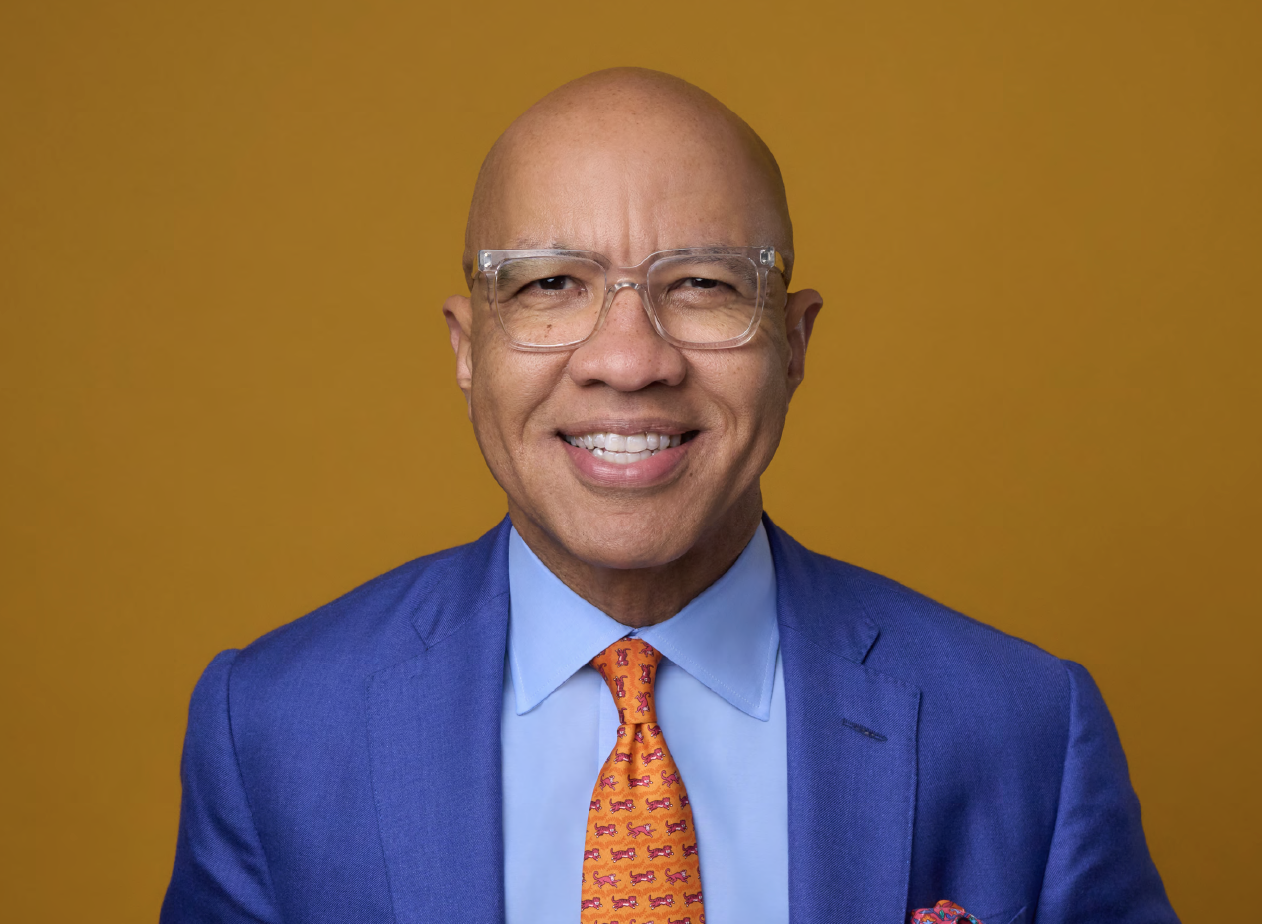
To see Darren onstage at The Design Summit, secure your registration here.
Few figures have moved through as many centers of cultural power as Darren Walker, and fewer still have used that mobility as deliberately as he has. In just the past eighteen months, he closed out twelve years running the Ford Foundation, took the board presidency of the National Gallery of Art, and this year became president and CEO of Anonymous Content, a global media production company. Read together, those moves outline a working theory of how institutions actually change, tested across philanthropy, museums, and now commercial media.
But the résumé alone doesn't quite explain Darren Walker’s influence. Born in rural Louisiana and raised in a working-class family in East Texas, he has often spoken about the formative distance between the world he came from and the institutions he would eventually lead. His trajectory has made him something of a translator between those worlds: equally comfortable in conversations about capital and public policy, art and popular culture, philanthropy and power. A lawyer by training and a longtime advocate for social justice, he has also become one of the country's most visible public intellectuals on matters of inequality, democracy, and the responsibilities of wealth.
It is a perspective that shaped his tenure at Ford, defined not simply by the size of its grants—though a $1 billion social bond issued during the pandemic, a first for any U.S. nonprofit, made headlines on scale alone. Under Darren, the foundation underwent a more fundamental redesign of how it deployed its sizable endowment, shifting away from project-based grants toward funding organizations' core operations and reorienting its portfolio around what he identified as the structural drivers of inequality.
His ascension to the presidency of the National Gallery of Art's board comes after six years as a trustee and reframes a question the design world doesn't ask often enough: who actually sets the brief for how a cultural institution presents itself to the public? Darren’s is less a prestige appointment than as a signal of where institutional taste-making is actually consolidating: not solely with the creative teams, but with the leaders who decide what gets built and funded in the first place.
Moving from a $16 billion nonprofit to running a for-profit studio producing film, television, and branded content isn't a career non sequitur so much as a bet that the instincts he sharpened in philanthropy—reading cultural moments early, building coalitions around ambitious bets, managing institutions through identity and values as much as balance sheets—translate directly into commercial creative leadership. What connects the disparate chapters of Darren Walker's career isn't subject matter—grants, galleries, and studio production have little in common on the surface—but a consistent conviction that institutions are only as good as the leadership willing to reset their agendas from the inside.