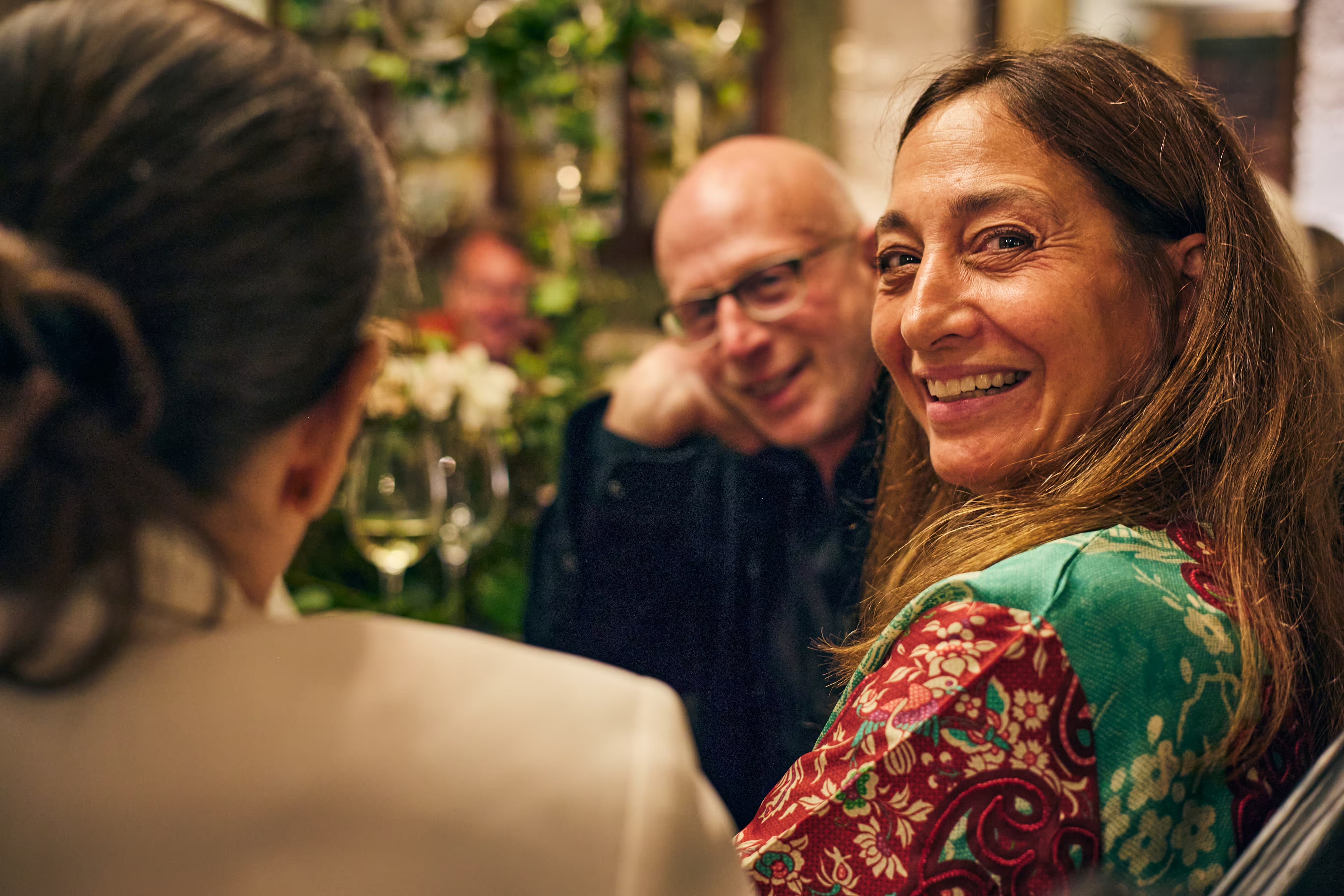
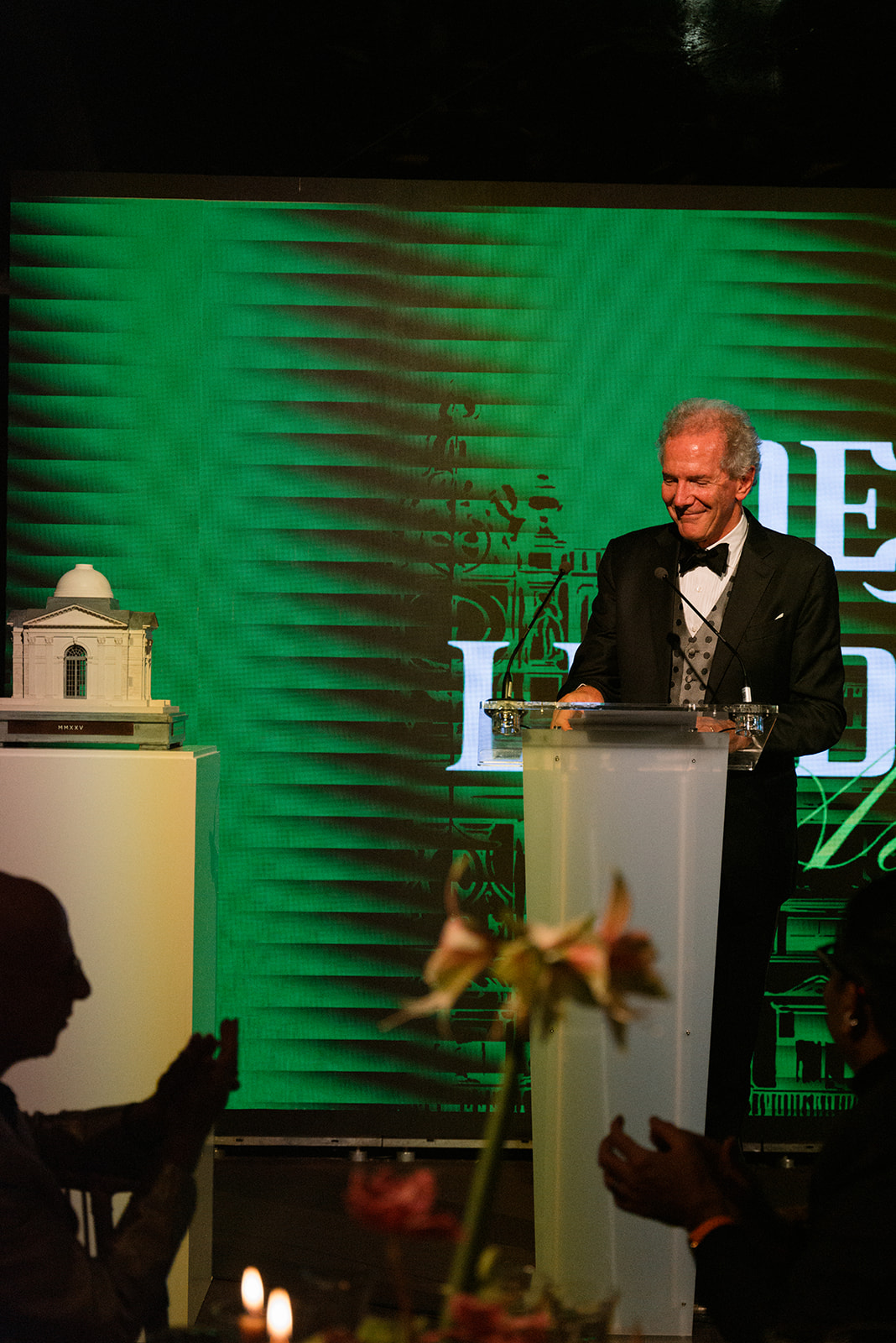
At the 2025 Design Leadership Summit in Madrid, the Design Leadership Network gathered at Palacio de Liria to present its annual Design Leadership Award to Ankie Barnes. The evening was a warm celebration of a figure whose leadership, generosity, and influence have shaped the DLN for two decades, and the award created in his honor carried a story of its own.
When it came time to conceive the object, Michael Diaz-Griffith, Executive Director and CEO of the Design Leadership Network, immediately thought of the British architectural model maker Timothy Richards. Working from his Bath studio, Richards has spent his career producing exquisitely detailed plaster models of historic buildings, admired by architects and collectors alike. Among the many figures whose work he has studied closely is Sir Edwin Lutyens—an architect Barnes has long admired. The idea felt fitting in more ways than one, not least because of a quiet Lutyens connection to the palace where the award would ultimately be presented.
Michael reached out to Timothy, and together they began discussing whether one of his models might become an award worthy of the occasion. From the start, Timothy had a particularly beautiful one in mind: a model of the temple at Tyringham Park, one of Lutyens’s most elegant garden buildings.
The temple has the presence of a monument in miniature. Its body is cast in plaster, the geometry crisp and exacting. Inside the dome lies a quiet flourish: the interior is finished in gold foil, catching the light with a subtle glow when opened. The flat roof and base are clad in patinated white metal foil, while the windows are rendered in finely etched brass. Each material contributes to the overall effect—an object at once scholarly, sculptural, and beautifully made.
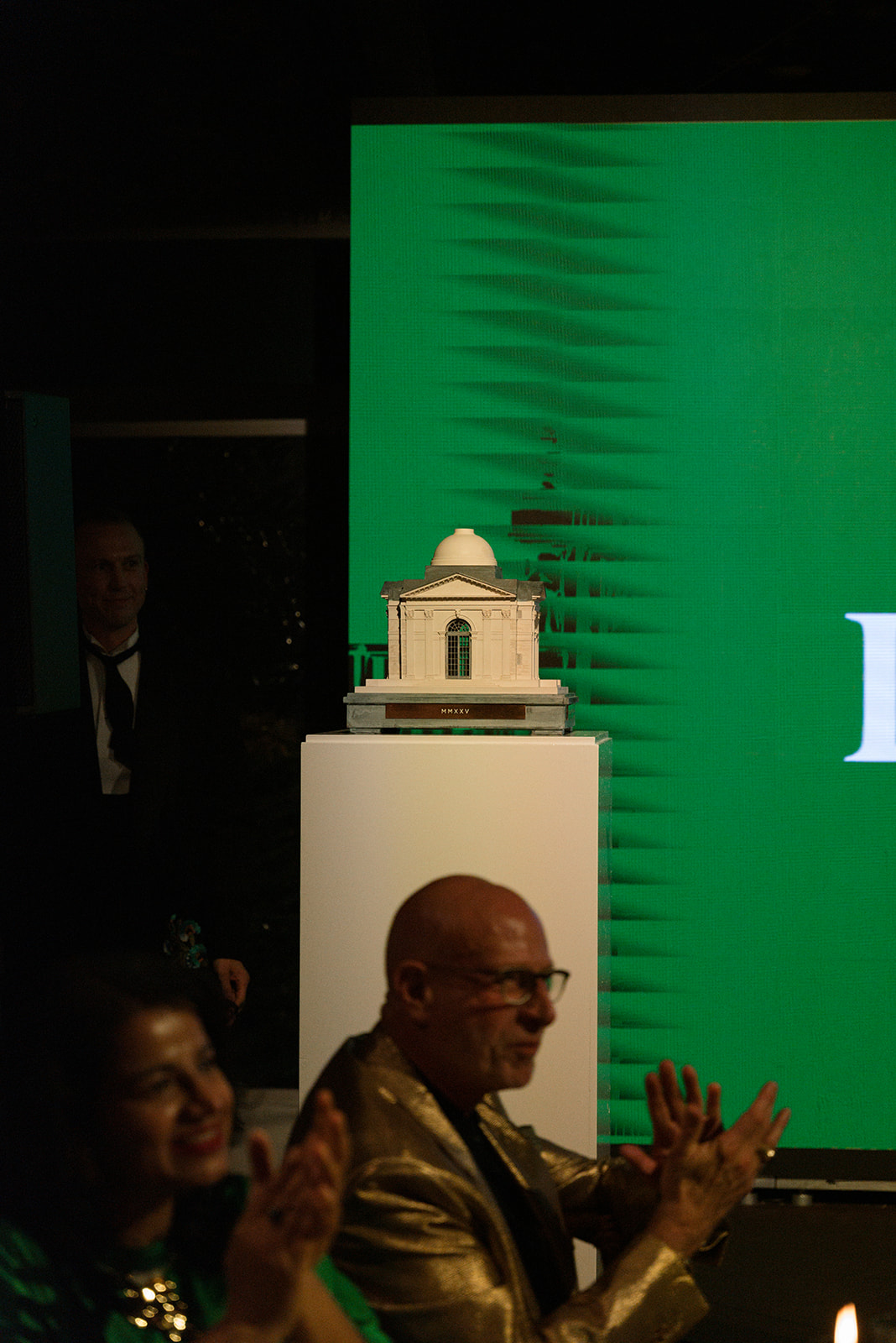
Richards embraced the project immediately and added an extraordinary final touch. Through his own connections, he arranged for the piece to be signed by Martin Lutyens, the architect’s grandson, linking the award directly to the family legacy behind the architecture it celebrates.
From there the effort became a feat of teamwork. The award was completed with remarkable speed and transported safely to Madrid with the help of the art-handling firm Cadogan Tate.
By the time the evening arrived at Palacio de Liria, the architectural thread felt especially resonant. Lutyens himself designed the palace’s chapel and maintained a friendship with the Alba family, the evening’s hosts, making the lineage behind the award feel perfectly at home in its setting. In fact, it was all a matter of planning.
During the dinner, the temple rested on a plinth, concealed beneath a white cloth. When the moment came, the covering was lifted to reveal the architectural jewel. In a room filled with colleagues and friends, the model of Lutyens’s temple became the centerpiece of a joyful tribute—a tangible link between a beloved architect, a respected leader, and the community gathered to honor him.