Foley & Cox Becomes MC Interiors
The change is a succession success story for Michael Cox and new partner Zuni Madera.
The change is a succession success story for Michael Cox and new partner Zuni Madera.
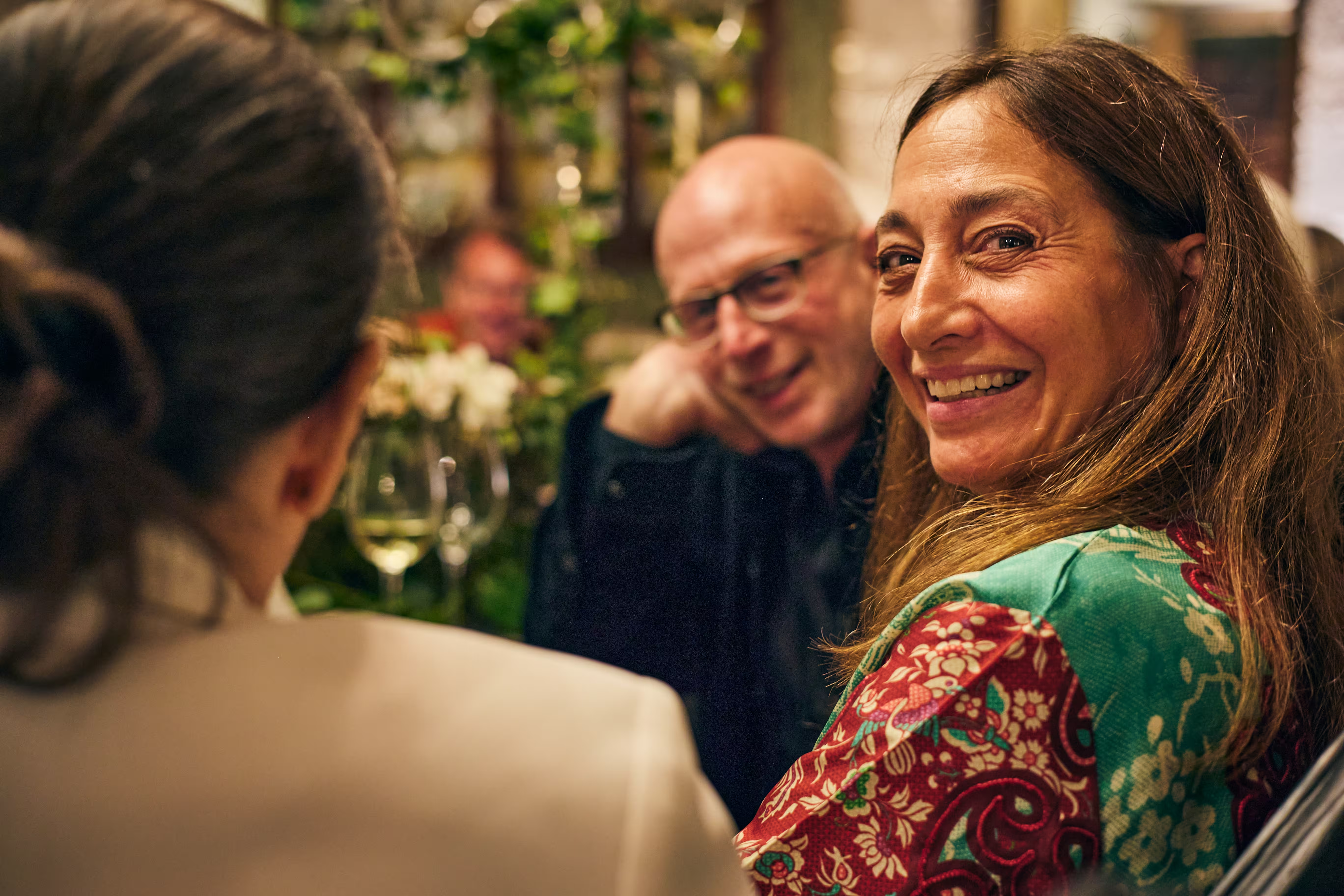
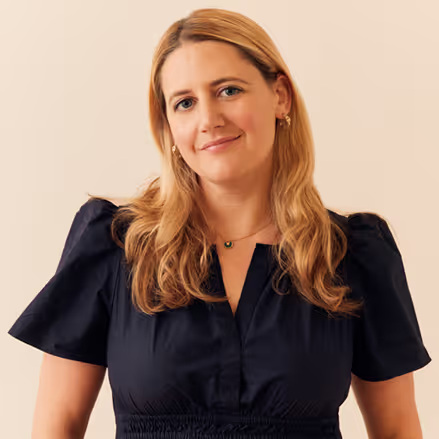
In 2002, after ten years at Ralph Lauren Home, Michael Cox opened the doors to his boutique design firm alongside partner Mary Foley, where the two built a reputation for excellent service and personal, comfortable interiors. Now, over two decades later, the firm has rebranded as MC Interiors in recognition of the partner role of Zuni Madera, who has worked there since her graduation from FIT. Here, the two DLN members talk about growth, transition, and what’s next.
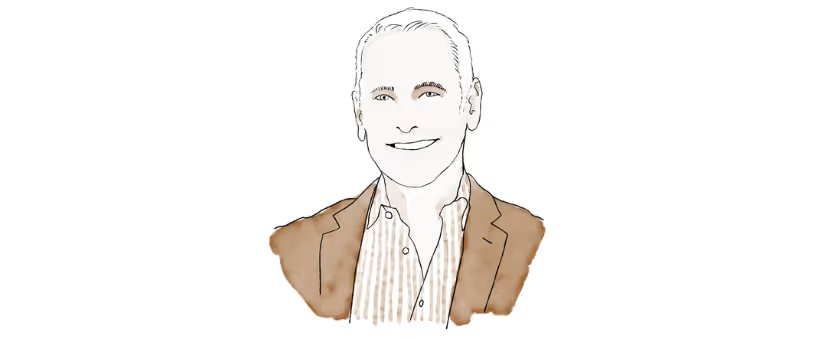
MC: Zuni began in our entry level position of Assistant Project Manager. Her hard work and commitment led from one promotion to another: Project Manager (PM) to SPM and eventually we created a new role in the firm of Design Director to acknowledge her ongoing development and contributions to the team, the clients, and the firm’s work.
After Mary Foley’s retirement in 2017, Zuni continued to manage more responsibilities and began to truly develop the design team as a role model and leader. She was promoted to Vice President in 2021. For four years as VP, Zuni cultivated incredible relationships as a leader in our industry – garnering the trust and admiration of architectural partners, vendor collaborators, and deepening her bonds with the firm’s legacy clients. She truly embodied the spirit of a partner before officially becoming one in the summer of 2025.
The luxury of 19 years of shared professional experiences made the transition quite smooth (some colleagues even described it as inevitable!).
But the transition from employee to owner can never be underestimated and I’m sure Zuni has felt many moments of intense responsibility in her first 6 months in her new position as partner.
We have cultivated shared core values that are truly the foundation of the firm: CLIENTS that are heard and taken care of, WORK that is personal, invested, and authentic and PARTNERS that are both good people and generous and creative collaborators.
The name change was thoughtfully considered over the course of a few years. We had many conversations with clients, architects, and industry partners and respectfully incorporated so much generous feedback into our rebrand. Tom and Austen at Dyad were also integral—they have helped develop and evolve our firm identity for 10+ years.
As I face 57 in April and acknowledge the age gap between Zuni and me, I’ve done some serious self-evaluation. The best advice I can offer is to truly do an inventory of personal strengths and weaknesses and then cultivate plans to supplement those weaknesses. For many years I’ve called myself a technology dinosaur and yet with Zuni’s help, support, and encouragement we have adapted so many new platforms and practices to run the business in an evolving industry landscape. New IT support team, outsourced procurement, flexible and remote support are just 3 examples of how Zuni has helped our firm adapt in the past few years.
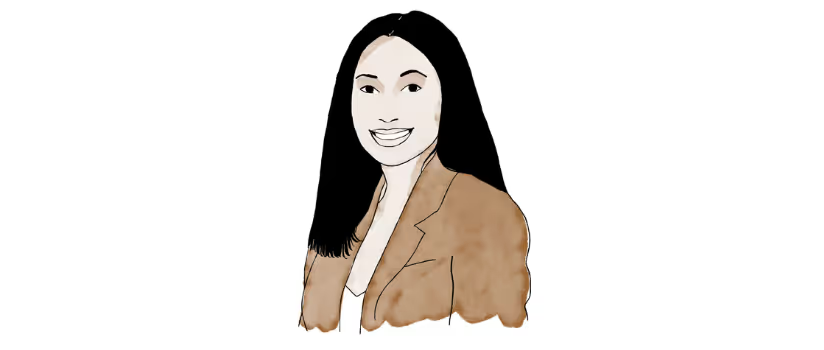
ZM: It was my first real job after graduating, and I remember when the firm contacted me to interview me, I saw their website, and I just thought the work was incredible. I felt that it was just what I was looking for: a boutique size firm that does residential design. The work that we do is so personal, and I think that's what has kept me passionate about it for all these years.
We’ve always been fairly small, and I think that really enables us to think smarter in terms of assessing our current business needs and where we need to expand as the world keeps evolving and changing. Plus, from a culture standpoint, I've always appreciated working with a smaller firm because you get to be fully immersed with the team.
The partnership discussions started when we were having conversations about promoting me to Design Director. At that moment, I felt that I was at the peak of my career, and this trajectory really made me open my mind to the possibilities of working within a firm like this.
Because I got to work with Mary and Michael so closely on projects, I was able to really understand what's important to them in terms of client expectations, relationships, collaboration with contractors and architects. That really groomed me to take my own role seriously.
Our firm values are really aligned with how we work with our clients. We're fortunate to be working with them on second and third projects, and internally, cultivating a relationship where we work really well together and are aligned with the goals of the firm and the project goes hand in hand with that continuity, and I believe that's what's made us pretty successful.
The biggest change was that I was very acclimated to working in smaller, intimate groups, and nowI’m supporting Michael and running our team on every project right. That pushed me to use a muscle that I knew I had but hadn’t really been flexing. I think the reason that evolution was successful is that I genuinely love training and developing a team. Early on, I was always the one to train and mentor our interns and that prepared me for this leadership role. Now, we’ve continued this mission of supporting the next generation with our endowed scholarship at NYSID, which I am really proud of—and that came out of these succession conversations.
There’s always the phase where you think, “I could do this more quickly myself.” But that’s something Michael instilled in me and I always tell my team: “f you take the time to train and develop someone, you're making it easier going forward, not just for yourself, but for the company. You’re building a stronger foundation.”
I am a pretty humble person, but something about the name change was significant because it really made it feel real.
Part of the way we are tapping into the future now is with our new work from anywhere model. That’s part of our effort to be consistently open minded to better navigate the ever-changing landscape of the industry.
As uncomfortable as change can be, once you submit yourself to it anything's possible. For a person like myself who started from the bottom I think recognizing that you're in the right organization is important. But then you really have to share what your goals are with those partners, perhaps can even nudge the partners and help them recognize: “There's something more beyond what we’re doing; how we can continue the legacy of the firm?”
By joining the DLN, you gain entry to the conversations, perspectives, and relationships shaping the design industry today. If you’ve found inspiration here, imagine what you’ll find inside our community.