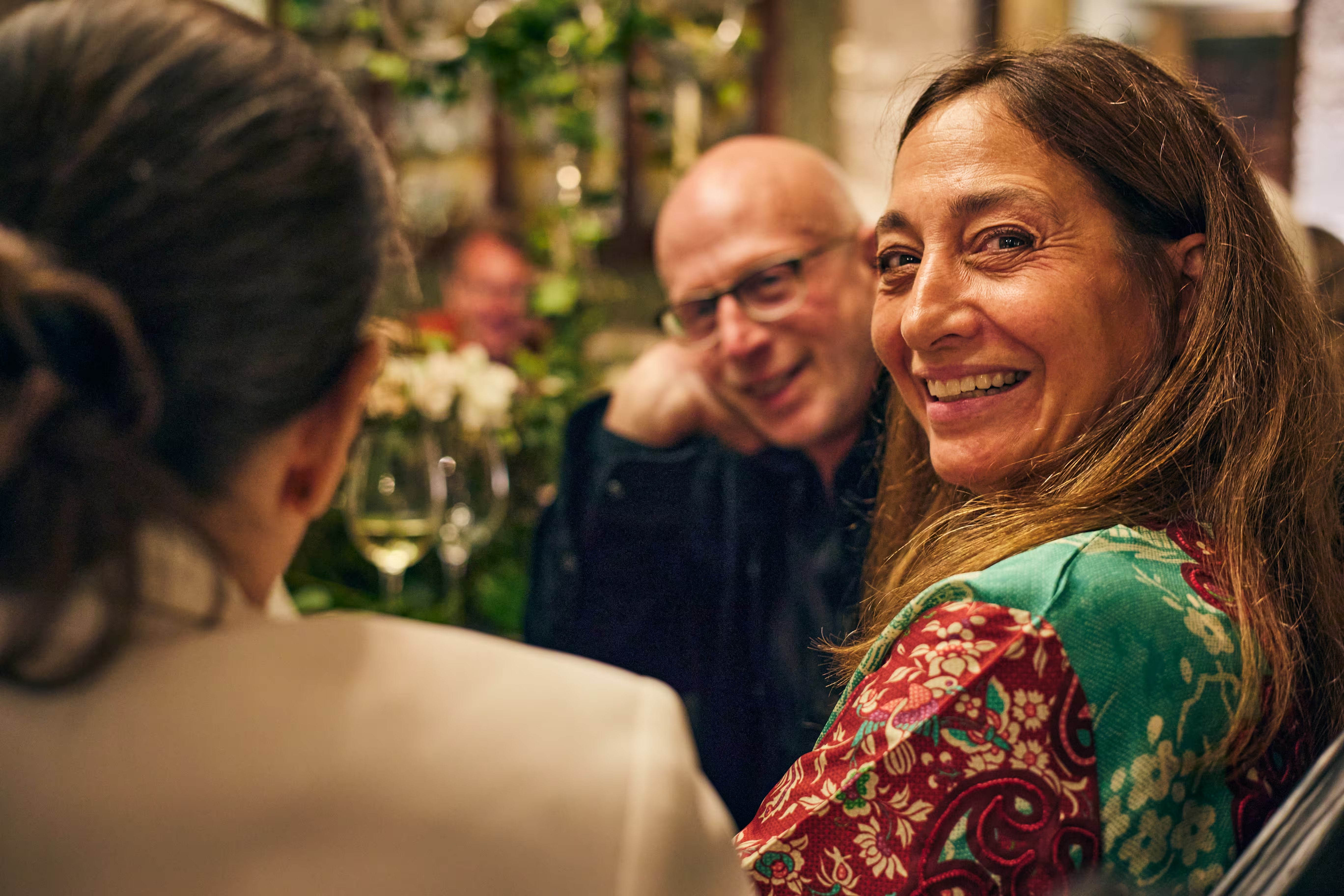
When the pandemic hit, Chicago-based interior designer Frank Ponterio pivoted quickly to remote work, like most studio leaders. But even after his office reopened, the shift stuck. Today, his 14-person team operates in a hybrid model, with staff based in Chicago, Naples, Atlanta, and St. Louis. Some work from one of two official offices; others are fully remote.
“I had great team members that I didn’t want to lose,” says Frank. “Life happened—people got married, people’s spouses needed to move, people had families.” Rather than forfeit talent to geography, he leaned into flexibility. What followed was a deliberate, thoughtful approach to maintaining connection, creativity, and company culture across time zones. Below, Frank shares the systems, rituals, and outlooks that keep his team moving forward—together.
Start the Week Off With Small Talk
Every Monday kicks off with a full-team Zoom meeting. The agenda? Watercooler chat that gives way to deep design work. “We start with a round-robin about everyone’s weekend,” says Frank. “It’s intentional—we want to stay connected personally, not just professionally.” The rest of the day is dedicated to breakout charrettes on active projects, where Ponterio meets with each team working through design decisions and problem-solving in real time.
Stay Nimble With Midweek “15s”
On Wednesdays and Thursdays, the team reconvenes for 15-minute check-ins. These “speed-dating” sessions help keep momentum between Monday meetings and help to replicate the kind of serendipitous hallway conversation that’s hard to replicate remotely, but essential to progress. “If someone’s stuck on something, we can quickly unblock them instead of waiting a full week.”
Make Professional Development a Shared Experience
To foster continuous learning, the team gathers monthly for a not-quite book club, usually centered around a podcast, masterclass, or design-related media. “We’ll do it during lunch or late on a Thursday so it feels casual,” Frank says. The topics range from fashion and lighting to the business of design. “It’s another way we stay curious and connected.”
Commit to—and Budget for—In-Person Moments
Each summer, the team convenes for a development session, and every winter, they celebrate the holidays together. Last year, he flew the entire staff to Chicago for the holiday party. Of course, these gatherings come with a price tag. “I never had to put team members up in hotels or pay for flights and Ubers before,” he notes. “Now, we’re probably doing upwards of 50 hotel nights a year.”
Foster a Culture That Feels More Like Family
For Frank, creating an environment where people feel comfortable bringing their whole selves, and sometimes their actual families, is a sign that what he’s doing is working. “Two of the design team not only brought their significant others to Chicago for the holiday party, but they brought their moms and dads, too,” he says.
Onboard Thoughtfully, With a System That Scales
The firm dedicates nearly a month to onboarding new hires, with the first two weeks focused on training and the following weeks tailored to each team member’s role. They even hired a “lead assistant” with a business background and serious systems savvy to oversee the process, creating detailed manuals, cheat sheets, and video tutorials.
Designate Office Hours Over Open-Ended Access
Rather than relying on Slack or constant text chains, Frank prefers structured communication. “We’ve found that respecting people’s time—with scheduled check-ins instead of constant interruptions—helps everyone stay more focused and efficient,” he says.
Keep the Culture Drama-Free and Purposefully Joyful
Years ago, Frank made a conscious shift in the kind of firm culture he wanted to cultivate. “I didn’t like going into my own office, which is a terrible feeling,” he admits. Today, he hires for mindset as much as talent and conducts multi-round interviews to ensure each new addition shares the firm’s collaborative, positive energy. “There’s always group laughter on our calls,” he says. “That’s how it should be—it’s design, not brain surgery.”
This story is from Issue 6 of The Quarterly. Click here to see the full issue.