Why purpose matters in business—and how a clear reason for being can engage employees, strengthen client relationships, and fuel long-term growth.

Are you growing your business on purpose?
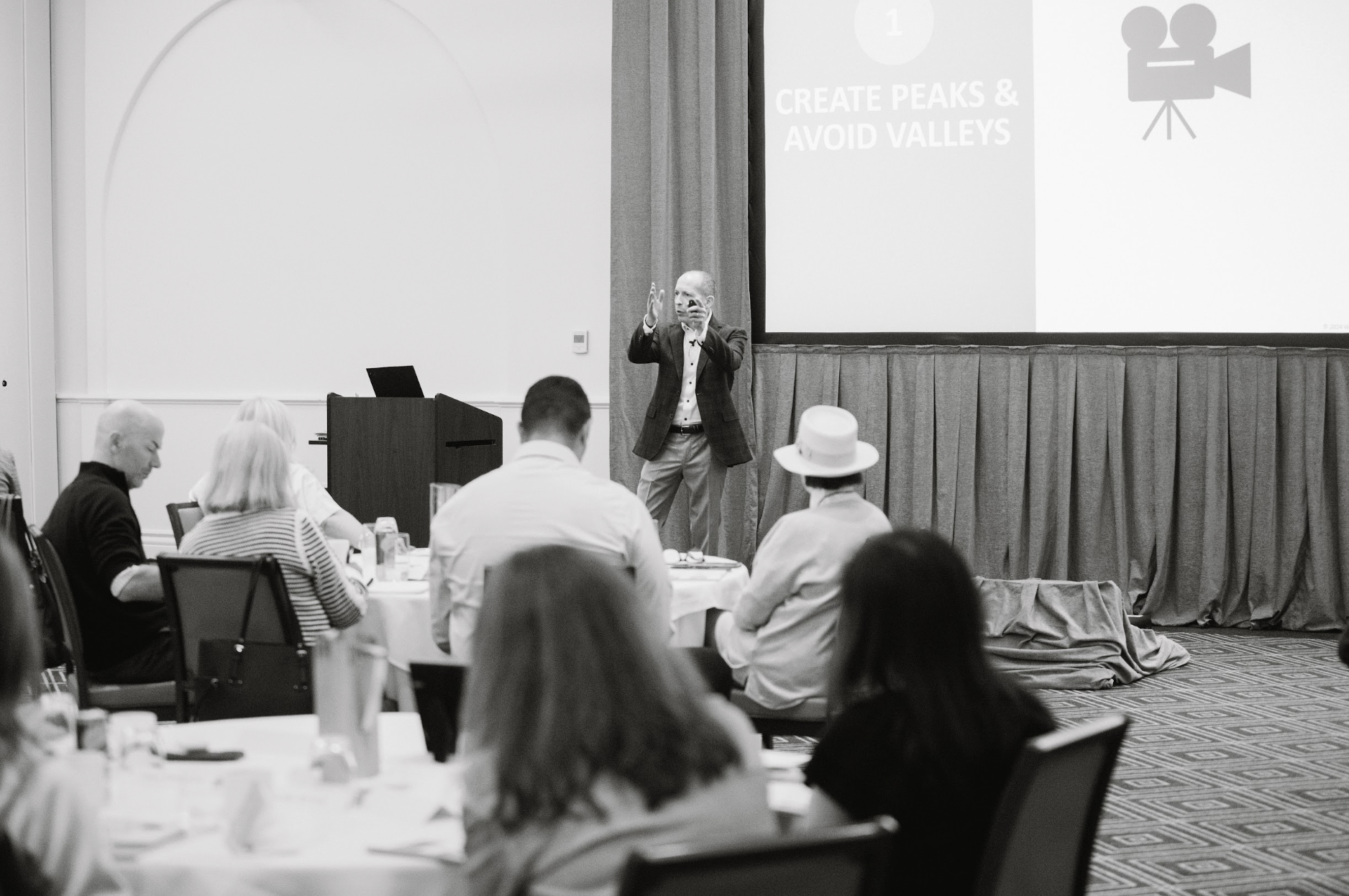
That was the focus of this year’s Design Leadership Workshop, held in June at California’s Ojai Valley Inn. There, DLN Members and Partners learned about how a purpose-driven business builds engagement with clients and colleagues alike. Leading the workshop was customer experience expert Jon Picoult, founder of Watermark Consulting and author of, From Impressed to Obsessed 12 Principles For Turning Customers and Employees Into Lifelong Fans.” Below, Jon highlights a few of the key points he covered at the workshop.
A Purpose Primer
It’s human nature to want to be part of something that’s bigger than ourselves. That’s why customers and employees tend to feel a stronger affinity towards organizations with a compelling brand purpose – a reason for being that goes beyond merely making money. (Though, as it turns out, purpose-driven companies financially outperform their peers, according to numerous studies on the subject.)
Purpose is the why behind what you do. It speaks to the difference you seek to make in the world or in the marketplace.
Sometimes, a company’s purpose is tied to a philanthropic cause or a societal need. For example, Patagonia describes its purpose as this: “We’re in business to save our home planet.” It’s a lofty goal grounded in environmental advocacy.
But an effective and compelling brand purpose doesn’t necessarily have to be linked to ESG (Environmental / Social / Governance) considerations. Purpose can also be about business processes and outcomes, such as when John Legere took the reins as CEO of T-Mobile (2012-2020) and transformed the wireless carrier from an industry also-ran into a formidable competitor.
Legere defined T-Mobile’s purpose as “Freeing Americans from the greedy, absurd practices of the old wireless companies.” While not ESG-grounded, that purpose still proved quite engaging and inspiring. It helped T-Mobile to reimagine its industry’s customer experience, and enabled it to singlehandedly drag much larger competitors into a new operating model that was largely designed by Legere and his team.
Pinpointing Your Purpose
Your brand purpose is essentially your firm’s reason for being. But how do you go about defining what that should be? Here are some suggestions for guiding that thought process:
Growing On Purpose
What these business leaders and the firms they shaped have in common is an enduring commitment to a focused and meaningful sense of purpose. They stand up to stand out, advocating for a cause that they (and those they serve) are passionate about, helping to create a brand experience to which people gravitate.
The key takeaway is simply this: Don’t just be in business, be on a crusade. Create a higher purpose for your firm that’s engaging to both your team and your clients. Because great, successful businesses don’t grow by accident. They grow on purpose – and yours can, too.
Jon Picoult is founder of Watermark Consulting, a customer experience advisory firm that helps companies impress customers and inspire employees, creating raving fans that drive business growth. Author of “FROM IMPRESSED TO OBSESSED: 12 Principles for Turning Customers and Employees into Lifelong Fans,” Picoult is a widely-respected public speaker, as well as a trusted advisor to some of world’s foremost brands. Learn more at www.jonpicoult.com.
This story is from Issue 9 of The Quarterly. Click here to see the full issue.
By joining the DLN, you gain entry to the conversations, perspectives, and relationships shaping the design industry today. If you’ve found inspiration here, imagine what you’ll find inside our community.